
North American herbal extract suppliers are getting a much closer look from brand owners who spent the last few years watching freight rates, tariff schedules, and customs timelines move in unhelpful directions. The instinct to shorten the supply chain is understandable. However, "buy domestic" is a slogan, not a sourcing strategy.


Some botanicals simply do not grow here at commercial scale. Others cost more domestically but land faster and clear customs without incident. This post breaks down the four variables that actually decide the question: lead time, landed cost, compliance burden, and supply continuity.
Key Takeaways
- Domestic sourcing usually wins on lead time and customs risk, not on unit price.
- Landed cost, not quoted price, is the only number worth comparing between regions.
- CUSMA origin rules can remove duty on qualifying goods, but tariff classification still drives the outcome.
- Some species have no commercial North American supply, so a domestic-only policy will strand part of your formula.
- Dual sourcing a critical ingredient costs more per unit and far less per stockout.
Why North American Herbal Extract Suppliers Are Getting a Second Look
Two things changed the calculation. First, freight volatility taught brand owners that a low quoted price means very little when a container sits at anchor for three weeks. Second, regulatory scrutiny of imported botanical material tightened, which raised the documentation burden on every shipment crossing a border.
The practical implication: sourcing decisions moved out of procurement and into operations. A buyer who once compared two spreadsheet cells now has to model transit, clearance, and the cost of running out.
North American herbal extract suppliers benefit from that shift for structural reasons rather than patriotic ones. Shorter transit means less working capital tied up in goods in motion. Domestic movement also avoids the customs step entirely, which removes an entire category of delay from the schedule.
That said, the advantage is narrower than the marketing suggests. Domestic material is frequently more expensive per kilogram. Furthermore, North American growing regions have real seasonal and acreage limits, so availability for some species is thin. Our post on herbal ingredient supply chain shortages covers what happens when those limits bind.
Lead Times From North American Herbal Extract Suppliers
Lead time is the variable where domestic and imported sourcing diverge most sharply, and it is also the one brand owners underestimate most often.
An imported botanical carries several sequential stages: harvest and processing at origin, consolidation, ocean or air transit, arrival, customs clearance, and inland delivery. Each stage has its own variance. Worse, the variances stack rather than average out.
Domestic movement collapses most of that into a single trucking leg. Here is what that means in practice: a reorder cycle that ran ten to fourteen weeks on imported material can run two to four weeks domestically for the same species.
That difference changes how much safety stock a brand has to carry. Longer lead times force larger buffers, and larger buffers consume cash and warehouse space. Therefore, a domestic supplier quoting a higher unit price can still reduce total inventory investment.
Worth understanding before you proceed: lead time only matters if your forecast is uncertain. A brand with stable, predictable demand and a long runway can absorb a fourteen-week cycle comfortably. A brand launching a new SKU cannot.
Landed Cost, Tariffs, and Duties
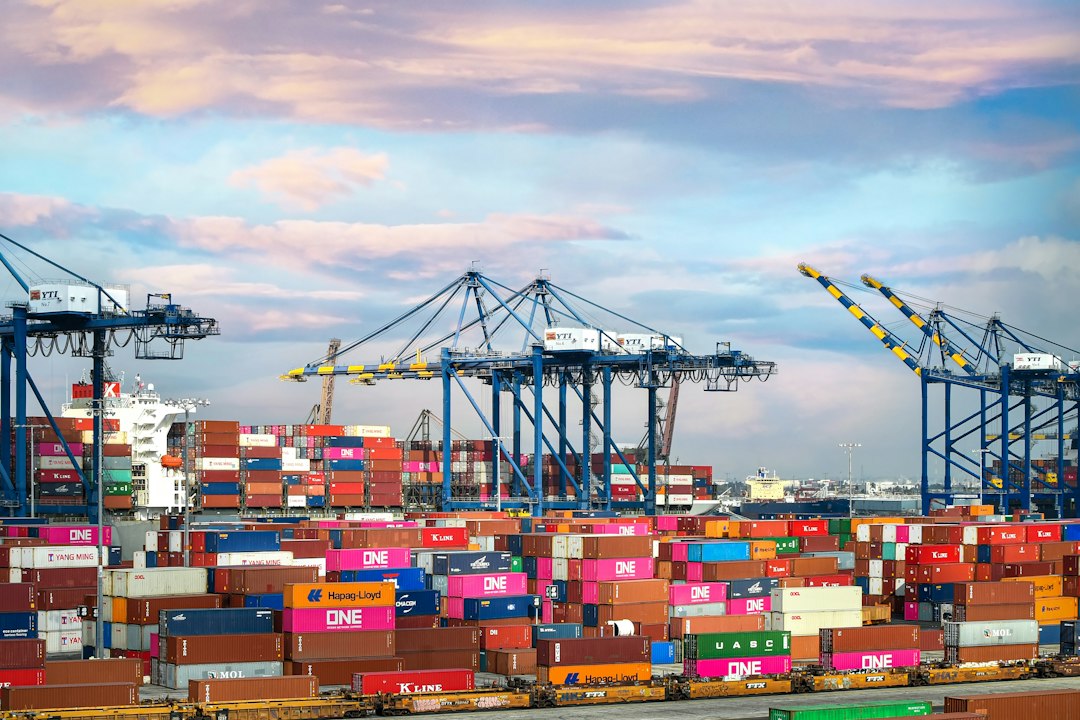
Quoted price is not comparable across borders. Landed cost is. Landed cost includes the goods, freight, insurance, brokerage, duty, and any inspection or demurrage charges the shipment picks up on the way.
Tariff treatment depends on classification and origin. Under CUSMA, goods that meet the agreement's rules of origin can enter duty-free between Canada, the United States, and Mexico. However, qualifying is a documentation exercise, not an assumption. The exporter has to certify origin, and the importer has to be able to produce that certification on request. The CBSA guidance on CUSMA sets out what that certification has to contain.
Here is where brands get caught: botanical material often has several plausible HS classifications depending on how far it has been processed. Whole dried herb, cut and sifted material, a powdered extract, and a liquid extract can fall under different headings with different duty rates. A misclassification is the importer's liability, not the broker's.
Currency is the other quiet variable. A multi-year supply agreement priced in US dollars carries exchange exposure that can erase a unit-price advantage entirely. Consequently, some brands price domestic supply at a premium and treat that premium as the cost of removing FX risk.
For the mechanics of bringing material across the border, see our guide to importing herbal raw materials into Canada.
Compliance Tradeoffs When Comparing Herbal Extract Suppliers
Both routes are subject to the same Health Canada expectations for natural health product ingredients. The difference lies in how much work it takes to satisfy them.
Every incoming lot needs identity confirmation, a specification, and a documented chain back to its origin. A domestic supplier operating in the same regulatory environment usually produces that paperwork in a familiar format. An overseas supplier may not, particularly if the material passes through a broker or consolidator before it reaches you.
This is where most brands run into trouble. A certificate of analysis from an unfamiliar laboratory, written to a standard you cannot verify, is not the same as traceability. Additionally, each intermediary between grower and manufacturer adds a link where documentation can thin out.
Imported material also faces CFIA import requirements and the possibility of inspection at the border. An inspection hold is not a compliance failure, but it is a schedule event, and it is one more reason lead time variance runs higher on imports.
None of this makes imported material inferior. Plenty of excellent botanical supply comes from outside North America, and for many species it is the only credible source. It simply means the qualification work is heavier. Our guides to supplier qualification and traceability and reading a raw material spec sheet cover what that qualification should include.
A Practical Framework for Choosing

The short version: decide per ingredient, not per company. A blanket policy in either direction will cost you money on some line items and availability on others.
Favour domestic supply when the species grows well in North America, when your demand forecast is uncertain, when the SKU is new, or when the ingredient is a small fraction of formula cost. In those cases the price premium is small in absolute terms and the schedule benefit is large.
Favour imported supply when the botanical has no meaningful North American production, when the domestic crop is unreliable year to year, or when the ingredient dominates your bill of materials and the unit-price gap is wide enough to outweigh carrying cost.
Dual source anything you cannot afford to run out of. Qualify a second supplier in a different region before you need it, and place a small maintenance order occasionally so the relationship and the paperwork stay current. Brands that skip this step discover the cost of a single-source dependency at the worst possible moment.
Finally, revisit the decision annually. Tariff schedules change, crops fail, and freight markets move. A sourcing choice that was correct two years ago may not be correct now.
The Bottom Line on North American Herbal Extract Suppliers
Choosing between North American herbal extract suppliers and overseas sources is a modelling exercise, not an ideological one. Build the landed-cost picture, add the carrying cost of the lead time, price the compliance workload honestly, and the answer usually becomes obvious on an ingredient-by-ingredient basis.
If you are working through that analysis for a formulation, our manufacturing services page outlines how we work with brands, and you can get in touch to talk through a specific project.
Published: September 19, 2026