
A herbal product stability testing program in Canada is what turns an expiry date on your label from a guess into a defensible claim. If you are launching an NHP and wondering how a manufacturer arrives at that "best before" date, the answer is not a rule of thumb. It is a structured body of data that Health Canada expects to see behind any shelf-life claim, and understanding it early saves brand owners from costly relabelling later.


Key Takeaways
- A stability testing program generates the evidence behind an NHP's shelf-life and expiry claims.
- Health Canada expects shelf-life claims to be supported by real or projected stability data, not estimates.
- Real-time and accelerated testing serve different purposes and are often run together.
- Storage conditions, packaging, and test intervals all shape the data a program produces.
- Buyers should clarify stability expectations before the first production batch, not after.
Why a Herbal Product Stability Testing Program Matters
Every NHP sold in Canada carries an expiry or best-before date, and under Health Canada's framework that date is a claim like any other. It has to be supported. A herbal product stability testing program in Canada exists to generate that support by measuring how a product changes over time.
Here's what that means in practice: stability data shows whether the active constituents, appearance, microbial safety, and physical characteristics of a product hold up across its intended shelf life. Without that evidence, a shelf-life claim is unsubstantiated, and an unsubstantiated claim is a compliance exposure.
The practical implication for a brand owner is straightforward. The expiry date you print is only as sound as the stability program behind it, which is why this belongs in the conversation with any contract manufacturing partner from the start.
Real-Time vs Accelerated Stability Testing
A stability program generally combines two approaches, and they answer different questions. Real-time testing stores product under its labelled conditions and tests it at set intervals across the full claimed shelf life. It is the gold standard because it reflects exactly how the product will behave on a shelf.
Accelerated testing, by contrast, stresses the product under elevated temperature and humidity to force changes faster. This lets a manufacturer project a provisional shelf life while real-time data accumulates in the background. For a herbal product stability testing program in Canada, accelerated data is often what supports an initial claim at launch, with real-time results confirming or extending it later.
Worth understanding before you proceed: accelerated results are a projection, not a substitute for real-time confirmation. A credible program runs both in parallel rather than relying on stress data alone.
What a Stability Program Actually Measures
Stability is not a single test. A well-designed program tracks several attributes at each time point so that any drift shows up before it reaches the consumer.
Typical parameters include the concentration of marker or active compounds, organoleptic properties such as colour, odour, and clarity, pH and alcohol content for liquid extracts, and microbial limits. For tinctures and glycerites specifically, separation, precipitation, and shifts in extract strength are the changes a program watches most closely.
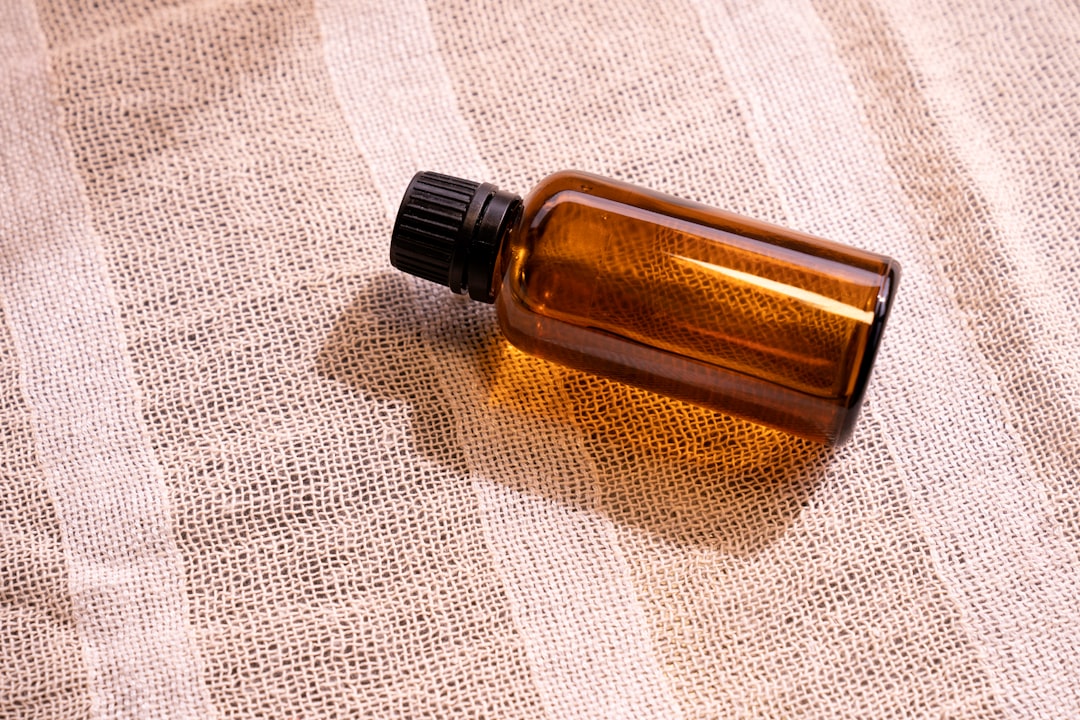
Packaging is part of the picture too. The same extract in amber glass behaves differently than in clear glass or plastic, so stability samples are stored in the actual production packaging. As a result, the data reflects the finished product a customer will receive, not an idealized version of it.
How Storage Conditions and Test Intervals Are Set
A stability protocol defines the conditions and the schedule up front. Storage conditions are chosen to match the label, commonly controlled room temperature, with accelerated chambers held at higher temperature and humidity for the stress arm of the study.
Test intervals follow a recognized cadence. Real-time studies are commonly pulled at 0, 3, 6, 9, 12, 18, and 24 months and onward, while accelerated studies run over a compressed window such as three to six months. Furthermore, the intervals are fixed in the protocol before the study begins, so the data cannot be cherry-picked after the fact.
This is where most brands run into trouble. They set a 24-month expiry on the label before any stability study exists to back it. In addition, they discover the gap only when a licensing reviewer or a retail buyer asks for the supporting data.
What Brand Owners Should Ask Before the First Batch
The best time to align on stability is before production, not after. A brand owner evaluating a herbal product stability testing program in Canada should ask a few direct questions early.
First, what shelf-life claim can be supported at launch, and on what data? Second, will real-time studies run alongside the accelerated work so the claim can be confirmed or extended? Third, are samples stored in the final production packaging? Finally, how are results documented so they are ready if Health Canada or a retailer requests them?
The short version: stability testing is not a formality bolted on at the end. It is planned into the project from the first batch, and it works hand in hand with the broader quality and control testing expectations any buyer should have of a Canadian manufacturer. If you want to map stability into your product timeline, you can walk through it on a discovery call.
Published: July 14, 2026