
Private label herbal product pricing in Canada is the line item most brand owners underestimate, and the one that quietly decides whether a product line is sustainable or stillborn. Moreover, getting the cost stack right means a private label tincture can compete on shelf with national brands. Get it wrong, and your second batch eats the margin from the first. This guide walks through how Canadian contract manufacturers actually build a quote, what drives the per-unit cost, and where new brand owners typically lose money before the first bottle ships.


Part of our complete guide to private label herbal products in Canada.
Key Takeaways
- Private label herbal product pricing is built from raw material cost, labour, packaging, overhead, GMP compliance, and margin — not a flat per-bottle rate.
- Batch size is the single largest lever on per-unit cost; doubling batch size often cuts unit cost by 30–40%.
- Organic, wildcrafted, and HP (1:2) extracts carry meaningfully higher raw material costs and should be priced separately from standard 1:5 tinctures.
- Canadian GMP and NHP compliance adds non-negotiable line items: testing, batch records, label review, and stability data.
- A defensible retail price assumes 4–5x landed cost for direct-to-consumer and 2.5–3x for wholesale-through-retail.
What Goes Into a Private Label Herbal Product Price
Every quote you receive from a Canadian contract manufacturer is the sum of six cost layers. Knowing which lever moves which number is the difference between negotiating effectively and accepting whatever lands in your inbox.
1. Raw materials. The herb itself, the menstruum (alcohol, glycerin, or water), and any excipients. For a 1:5 tincture, this typically runs 25–45% of finished cost, depending on the herb. Organic Ashwagandha runs higher than conventional Echinacea purpurea radix. Additionally, an HP (1:2) extract uses roughly 2.5x the dry herb of a standard 1:5, and the price reflects it.
2. Direct labour. Maceration, pressing, filtering, QC sampling, bottling, capping, and labelling. In a Canadian GMP facility, labour is real money. Therefore, minimum wage isn't the operative number; qualified production labour is.
3. Packaging. Amber glass, dropper assemblies, tamper bands, secondary cartons if used, and labels. Packaging is where a $4 tincture and a $14 tincture often diverge most visibly.
4. Overhead. Facility, equipment depreciation, utilities, QA/QC infrastructure, document control. Spread across the batch.
5. Compliance. Third-party potency or microbial testing, organoleptic evaluation, batch records, stability sampling. Moreover, these are non-negotiable in a GMP environment, and they show up in your unit cost whether the quote breaks them out or not.
6. Manufacturer margin. Whatever the contract manufacturer adds on top to keep the lights on. Furthermore, this is the only layer that's truly negotiable — the others are physics and regulation.
Batch Size Is the Largest Lever in Private Label Herbal Product Pricing Canada
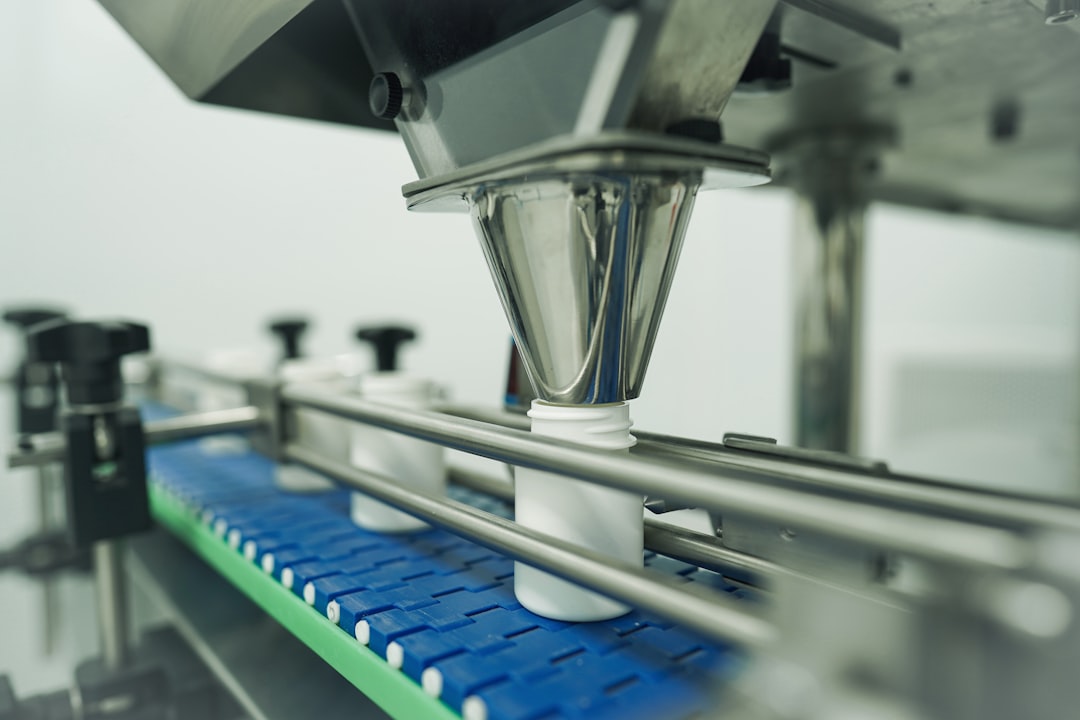
If there's one number worth understanding before you ask for a quote, it's batch size. Setup, cleaning, QC sampling, and changeover costs run roughly the same whether the batch is 100 bottles or 1,000 bottles. Therefore, spreading them across more units is the cleanest way to drop unit cost.
Here's what that means in practice: a 100-unit private label run of a 100mL tincture might land at $14–18 per bottle. The same formula at 500 units often falls to $9–12. At 1,000+ units, $7–9 becomes realistic for many herbs. Consequently, the second order is where margin actually appears. Specifically, the curve flattens past 1,000 units because raw materials and packaging dominate at that volume.
This is why brands launching with low MOQ runs need to plan for the second order. The first batch is intentionally a market test, not a margin event. As a result, smart brand owners price the launch run as marketing spend and only project real margin from batch two onward, when volume justifies a tighter quote.
If you're sizing a first run, our tincture calculator shows how unit cost scales across batch sizes for our standard SKUs, which is a useful reference even before a custom quote.
Where Compliance Costs Hide in the Quote
Brand owners new to NHP-licensed manufacturing often ask why one quote is 15% cheaper than another for what looks like the same product. The answer is usually compliance. Specifically, the cheaper quote may miss line items the regulator will eventually require, or it bundles them into a vague "overhead" line you can't audit.
Specifically, look for these line items: third-party potency testing, microbial testing (E. coli, salmonella, yeast/mould, total aerobic count), heavy metal screening for higher-risk herbs, identity verification of incoming raw materials, batch record creation, and stability sampling. In addition, label review against Health Canada NHP labelling rules belongs here too, especially for first runs of a new SKU.
However, none of these are optional once your product carries an NPN. They're the cost of operating inside the regulatory system, not a markup. A quote that doesn't show them is either absorbing them silently (acceptable) or skipping them (not acceptable, and a real liability for the brand owner whose name is on the bottle).
For more on what compliance actually looks like at the manufacturing level, see our companion post on GMP certified herbal manufacturing in Canada.
Setting a Defensible Retail Price
Once you know your landed cost per unit, retail pricing is a function of channel and brand position. A single multiplier doesn't work across all routes to market.
Direct-to-consumer (your own site): aim for 4–5x landed cost. That covers payment processing (2.9–3.5%), shipping subsidies, marketing acquisition, returns, and a real operating margin. A 100mL tincture at $9 landed should retail at $36–45 to be sustainable, not $24.
Wholesale to clinics or retailers: aim for 2.5–3x landed cost as your wholesale price, with retailers marking up another 2x to consumer. Therefore, the same $9 landed bottle goes wholesale at $22.50–27, and on shelf at $45–54. The practical implication is that DTC and wholesale need to live at the same retail price, or one channel will cannibalize the other.
Subscription or auto-ship: the same math, with a 10–15% subscriber discount baked in. The retention economics carry the lower margin per unit because LTV climbs with order count.
Brands that fail at this stage usually start by reverse-engineering price from a competitor's shelf tag without knowing that competitor's batch size, herb sourcing, or compliance posture. Those numbers are not comparable. Build pricing from your own cost stack up, not from someone else's retail tag down.
How Perfect Herbs Structures a Private Label Quote
When you request a quote from our team, we break the cost out so you can see what's moving. Raw materials are quoted by herb at current market rates — organic, conventional, and HP variants priced separately. Labour, packaging, and overhead are bundled at the batch level. Furthermore, we itemize compliance items (testing, batch records, label review) so you can see the regulatory cost separately.
That transparency matters because herb costs aren't static. Echinacea pricing shifts with harvest season; reishi extract pricing shifts with global supply. Additionally, a 90-day quote lets you plan, while a quote pretending raw material cost is fixed only hides the variability you'll eventually pay anyway.
Furthermore, our manufacturing services offer fixed pricing on standard SKUs and quoted pricing on custom formulations, with the breakdown visible in both cases. If you're early in product development, we can also model unit cost across three batch-size scenarios so you can decide where the launch run lives. Get in touch via our contact page with the formula, target batch size, and packaging spec, and we'll come back with a structured quote.
Private label herbal product pricing in Canada is rarely as opaque as it first appears. Once the cost stack is visible, the conversation shifts from "is this expensive?" to "is this priced correctly for my channel?" — which is where every sustainable brand needs to land before the first bottle ships.
Published: May 7, 2026