
Herbal product packaging design in Canada is where most new brand owners discover the gap between regulatory checkbox and retail conversion. Health Canada's NHP rules dictate what must appear on the panel. The shelf, however, dictates whether anyone picks it up in the first place. Both jobs have to be done at once, and the bottle, label, secondary carton, and outer carton all need to agree on the same story.

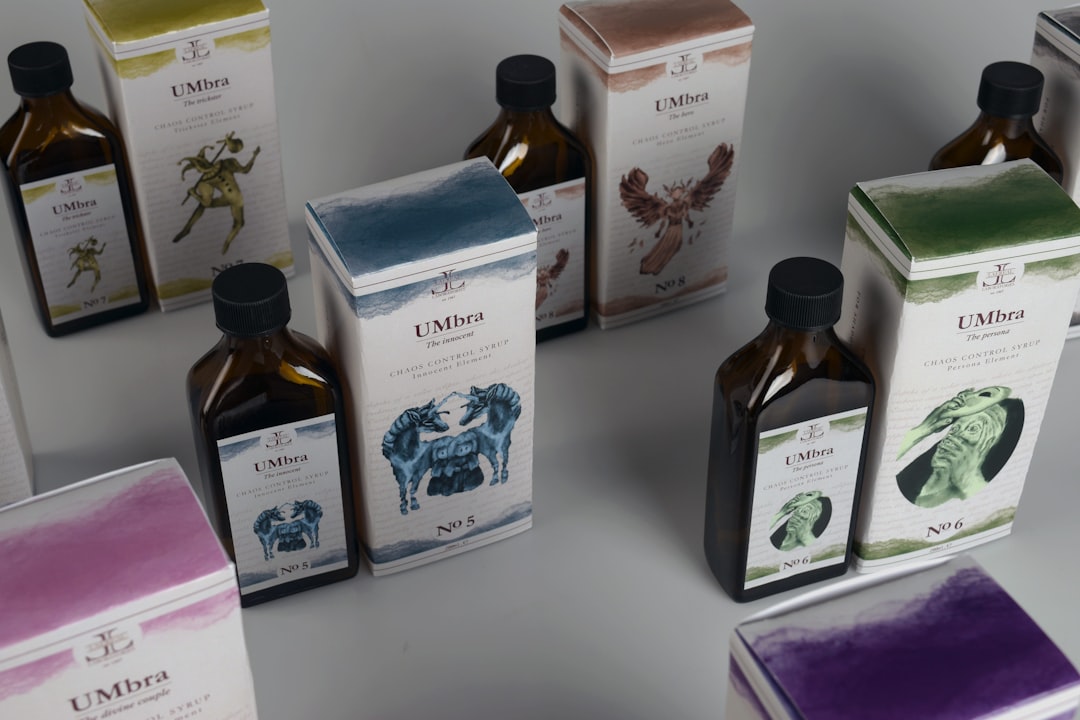
This is a guide for brand owners and procurement leads working through a private-label or custom-formulation engagement with a Canadian NHP contract manufacturer. We will cover the regulatory anchors, the retail conversion levers, the production-side constraints, and how packaging decisions ripple into pricing, lead time, and shelf life.
Key Takeaways
- NHP-mandatory label elements (NPN, dosage, medicinal/non-medicinal ingredients, risk info) anchor the layout — design around them, not over them
- Conversion at retail is driven by shelf legibility, claim hierarchy, and dominant buying motive — not graphic flair
- Bottle size, closure, fill volume, and label substrate all affect manufacturing cost and lead time
- Secondary packaging (cartons, leaflets) is where most first-time brands underestimate spend
- Lock packaging specs before formulation goes into production — late changes cost weeks
Regulatory Anchors: What Has to Be on the Label
Before any creative work begins, the NHP labelling rules from Health Canada set the boundaries for herbal product packaging design Canada brands have to ship under. As a result, the regulatory block claims a fixed zone on the panel. Design has to work around it, not over it.
The required elements include: product name and brand name, NPN, medicinal ingredients with quantity per dose, and non-medicinal ingredients. Furthermore, the label must list recommended use, dosage form, route of administration, recommended dose, and recommended duration of use. Risk information (cautions, contraindications, adverse reactions, drug interactions) also belongs on the label. Finally, storage conditions, lot number, expiry date, and licence holder address round out the mandatory block.
Bilingual labelling (English and French) is required in Quebec. In addition, it is the safer default for any brand planning Canada-wide distribution. The type size and contrast rules under the Consumer Packaging and Labelling Act apply on top of NHP rules.
The practical implication: the regulatory block is non-negotiable real estate. Brands that push it to a small back panel and load the front with creative usually end up redoing the label after first review. Therefore, plan the regulatory zone first. Then design the rest of the panel around it. For deeper context, see our NHP label requirements guide.
Designing for Retail Conversion: What Actually Moves a Bottle Off the Shelf
Once the regulatory layer is locked, conversion takes over. Herbal product packaging design Canada retailers reward usually hits a few common notes. However, those notes have less to do with graphic style than with how quickly a shopper can answer three questions: what is this, what is it for, and is it credible.
Shelf legibility comes first. A label that reads cleanly from a metre away beats a beautifully laid out one that disappears under store lighting. In addition, high contrast between the product name and the background does more for pickup rate than illustration detail. Generous type size for the dominant benefit claim helps too.
Claim hierarchy is the next lever. The single dominant benefit belongs at the top of the visual stack. Secondary attributes (organic certification, vegan, gluten-free) come below it. Furthermore, tertiary information like brand story belongs on the back panel where a shopper who already picked the bottle up will read it.
Credibility cues matter more in herbal categories than in mainstream consumer packaged goods. Latin name, plant part, extraction ratio, and clear sourcing language all signal a brand that knows what it sells. As a result, buyers comparing two private-label tinctures on a co-op shelf will reliably reach for the one whose label reads as competent.
Production-Side Constraints That Shape the Design
Packaging design does not exist in isolation from manufacturing. Every spec ripples into cost, lead time, and unit economics. Therefore, brand owners working with a Canadian NHP contract manufacturer should pin down a handful of decisions early.
Container format and size. 30 mL, 50 mL, 100 mL, 250 mL, and 500 mL are common tincture formats. The container affects how many doses are in the bottle, which directly shapes the retail price point and the perceived value. Glass bottles dominate the category because they protect the extract and signal quality, but bottle weight affects shipping cost at scale.
Closure and applicator. Dropper assemblies, spray pumps, and orifice reducers each carry their own per-unit cost, fill speed implications, and child-resistance requirements depending on the product. The closure choice often gets made last and then forces a label rework when the bottle silhouette changes.
Label substrate and finish. Paper, synthetic film, and clear film each interact differently with bottle condensation, refrigerator storage, and tactile expectations. Spot UV, foil, and embossing add cost but can be worth the spend on a hero SKU. A matte synthetic with a single foil accent is a common middle path for the price tier most Canadian herbal brands compete in.
Secondary packaging. Folded cartons, hangtags, and inserts are where first-time brands routinely under-budget. If your distribution plan includes pharmacy or grocery channels, secondary cartons often become a requirement rather than an option. Worth understanding before you proceed: Health Canada risk information that does not fit on the primary label can move to a leaflet, but the leaflet then becomes part of the licensed packaging and cannot be changed without a notification.
How Packaging Decisions Affect Pricing, Lead Time, and Shelf Life
A common mistake among early-stage brands is treating the label and the bottle as a downstream graphics task. In practice, packaging is upstream of nearly everything else in the engagement.
On pricing: the difference between a stock amber dropper and a custom embossed glass can run several dollars per unit at low volume. At a 5,000-unit run, that gap can be the difference between a 35 percent retail margin and a non-viable one. For an early sense of how packaging assumptions affect cost-of-goods, our tincture calculator models the herb side. The packaging side runs in parallel.
On lead time: custom glass moulds run 8 to 16 weeks from order to first delivery. Custom dropper colours run 6 to 10 weeks. Pre-printed shrink sleeves are faster but commit you to a SKU before formulation is finalised. As a result, off-the-shelf bottles with custom labels are the fastest route. They are the right choice for a first run while the brand is still proving the market.
On shelf life: dark glass meaningfully extends the stability window of light-sensitive extracts. Amber and cobalt blue are the standard for a reason. Clear glass on a botanical extract is a design choice. However, it needs weighing against the photodegradation risk. For more on this trade-off, see our tincture shelf life and stability post.
Working With a Contract Manufacturer on Packaging
A capable Canadian NHP manufacturing partner will not just print whatever artwork lands in the inbox. The handoff between brand design and production has its own checkpoints. Skipping them is one of the most common reasons a first launch slips.
The standard sequence runs: press-ready PDF with bleed and crop marks, dieline confirmed against the actual bottle and closure (not a generic mockup), regulatory review against the formula on file, proof round against pre-production samples, and a final colour-matched press proof before the run.
Brand owners should expect the manufacturer to push back on any label that puts mandated text below minimum type size, omits required risk information, or claims something the licensed formula doesn't support. That pushback is a sign the partner is doing their job. For brands at the earliest stage, see our first-time brand owner checklist for what to have ready before you start packaging conversations.
The short version: lock the formula, lock the format, lock the regulatory anchors, then design. As a result, late changes (which cost weeks) get avoided. To talk through packaging on a specific SKU, get in touch with Perfect Herbs.
Published: May 29, 2026